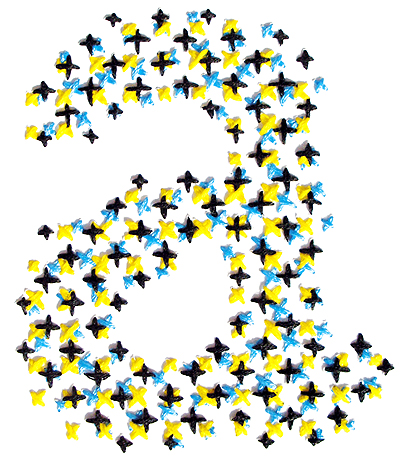
Printed Matter – Evelin Kasikov

frontpage

Evelin Kasikov is an Estonian-born, London-based designer who explores the boundary between craft and print by incorporating stitches into print works.


Having studied traditional printmaking techniques (intaglio, letterpress and lithography), Kasikov now works predominantly in editorial and book design (notably, for the ever-impressive Phaidon list).

Kasikov describes her latest project, Printed Matter, as ‘an investigation into the relationship between tactile and visual perception, seeing and touching.’

Duotone

Monotone

Printed Matter consists of ‘hand embroidery based on the analysis of optical mixture and colour printing processes.’ I love how the individual stitches represent CMYK, adding a tactile third dimension to print work.

Printed Matter

Printed Matter comprises four thematic books: Process, Element, Type and Image, which fit together to form a cohesive whole.

Process

Element

Type

Type

Image

Image

The trend of incorporating a handmade, crafted element into graphics is still going strong, but Kasikov’s work has a quiet, mature intricacy that transcends contemporary fashions.

Printed Matter
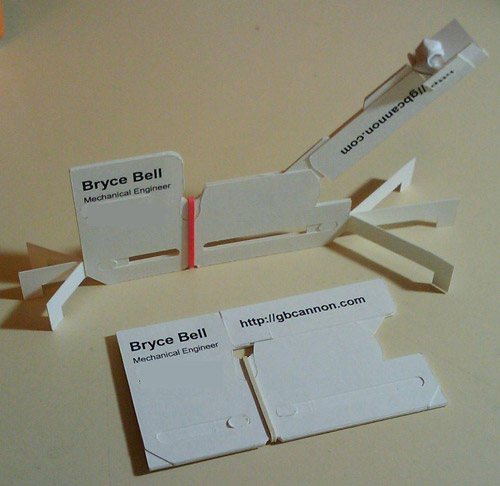
Mixing Work With Play – Creative Business Cards

cardapult

Although my focus as a contributor to Design Tavern is on Interior Architecture, I could not help but share these uber-innovative business card designs. Recently featured on Smashing Magazine.com, these creatives have found an innovative way to mix work and play.

This first design is by Bryce Bell who has devised a way to take the typical 2 x 3 business card layout and transform it into a business card catapult – also known as the “Cardapult”.  You can watch and learn how to make your very own version of the Cardapult here.

This second design is from the Columbus Society of Communicating Arts at cscarts.org.  Here the business cards directly translate into a traditional set of playing cards.

This third design is from Webstock at webstock.org.nz. Webstock hosts web-related events and conferences to promote the improvement of websites and social media through inspiration and education.  These creative business cards turn the bore of trading contact information with other professionals into an exciting game.  Each employee is worth a certain amount of points, the more you engage with others, the higher your score will be.

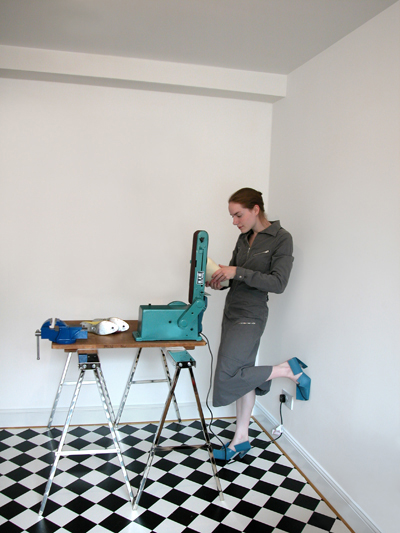
Shoe Construction — Marloes ten Bhömer and the architecture Of Shoes.

marloestenbhomerstudio

Following an interesting lecture last night titled ‘The Architecture of Shoes’ In which the presenter demonstrated the many fields of design architects and other design degrees can go into.

Stated were some interesting figures on Architecture at Milan University, Italy; 1000 students were enrolled each year whilst only 100 graduated.
Rather than Looking at it as 900 students failing architecture between entry and finishing, Instead 900 students were provided with the design skills to go into a number of different fields.

I can’t help but think of buildings when I see the like’s of Marloes ten Bhömer’s shoes.

I’ll be honest, women’s shoes fall outside my usual scope of interest but the design behind the footwear below I think is really innovative wearable artworks.

The construction, use of materials (arbon fibre, fiberglass, Stainless steel , Polyurethane resin and tarpaulin) clear cut clean lines, are all innovative and being to move from the world of women’s fashion into product and architecture design.

From her website:
“Critically acclaimed designer Marloes ten Bhömer produces shoes that are both provocative and otherworldly. Her work fuses artistic and technological experiment in order to discover shoes anew. Ten Bhömer’s work has been exhibited in museums and galleries internationally and she gives lectures about her work worldwide. She takes on challenging commissions from galleries and private clients.”

http://marloestenbhomer.squarespace.com/

Any Personal Favourites?

Design Follow Friday

AndrewMaynard

In a response to my twitter addiction I have decided to devote this post to some of favourite people to follow.

http://twitter.com/AndrewMaynard

http://www.maynardarchitects.com/

Named in Wallpaper Magazine’s Architects Directory, an ‘anual guide to the world’s most innovative practicies’, Andrew Maynard’s design practice is quickly becoming recognised as an emerging force on the architectural scene. Since Andrew Maynard Architects was establised in late 2002 it has been recognised internationally in media, awards and exhibitions for its unique body of built work and its experimental conceptual design polemics.

http://twitter.com/archiCULTURE

http://www.archiculturefilm.com/

Architects-turned-filmmakers turn the camera on the arch studio following 5 thesis students – posts on documentary, film, architecture, tech, Brooklyn, NYC.

http://twitter.com/DujourMag

http://dujourmag.com/

America’s first independent, internationally distributed, eco-friendly fashion publication dedicated exclusively to emerging designers.

http://twitter.com/nicholaspatten

http://nicholaspatten.com/

Video Editor, Graphic/Web Designer, Red Camera rental, I’m a Mac.

http://twitter.com/NOTCOT

http://www.notcot.org/

NOTCOT is a visual filtration of ideas + aesthetics + amusements. NOTCOT’s two sites have become the daily sources of inspiration for creatives everywhere, fighting the good fight against “creative block” since 2005 with visually stunning imagery, the latest in international trends, and a passion for all things well designed.

http://twitter.com/yellowgoatetsy

http://yellowgoatdesign.blogspot.com/

A Jewelry Designer and blog writer
“My philosophy for my jewelry and this blog, is to bring happiness to others. I hope to share the joy of creating and finding beautiful things to all the readers and customers.”

Tauba Auerbach

constraction-install

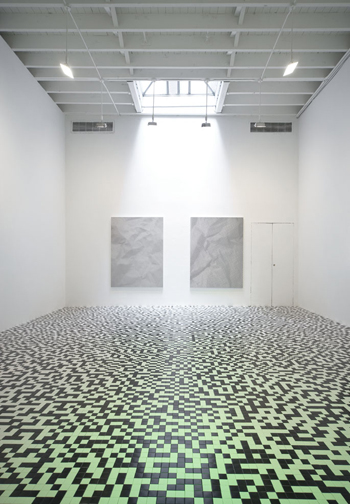
Words fail me when trying to describe the amazing work of mixed-media artist Tauba Auerbach. I came across Auerbach’s work recently at the San Francisco Museum of Modern Art, where she exhibited works as a 2008 recipient of the SECA (Society for the Encouragement of Contemporary Art) Awards.

The SECA Awards program summarises Auerbach’s work by stating that ‘Auerbach investigates the logic of representational systems in series of drawings, prints, painting and mixed-media works that isolate symbols drawn from a range of communicative forms, including the Latin alphabet, Morse code, and even the patterns of television static.’

Auerbach explores the visual by-products of digital and analogue broadcasting in her work.

She often uses typographic or numerical symbols, words and figures to create meaning, such as the anagrams below.

The intent behind Auerbach’s work is quite fascinating – that is, to almost repurpose existing symbols of communication. In an interview published in the 2008 SECA catalogue, Auerbach says: ‘Initially, I valued being a kind of Luddite and doing everything by hand. Craft is dying and this is really upsetting to me. I blamed technology, but I’ve changed my mind about that now… these things are not mutually exclusive… In looking at the material of what is behind anything digitized — ones and zeros, or a signal and then the absence of a signal — I’ve come to feel that the system is prohibitively absolute. It’s a simple idea of something being there or not being there, and that’s what continues to fascinate me.’

Do check out taubaauerbach.com for more of Tauba’s beautiful work (and some very cool web design to boot).

What is Eco-design?

what-is-eco-design?

It’s not easy being green, Kermit once sang, but in terms of design, it’s the way to go these days. In spirit of saving the earth through innovative design, What is Eco-design? is an online resource established by Design Victoria aimed at providing a “solid grounding in eco-design principles and practice”.

In a nutshell, the website is designed to provide a myriad of resources to designers which is relevant, timely and, most importantly, practical. Developed by the Centre for Design at RMIT University, WSP Environmental in collaboration with industry experts, the resources featured come in a variety of formats filled with all the information an earth-conscious designer could want. There are quick reference guides, dozens and dozens of useful links as well as quick tips, advice from industry professionals and vodcasts of “Design Victoria’s sell-out eco-design seminar and workshop series including introduction to eco-design; life cycle analysis and eco-labeling”

The most important selling point of the initiative is that it is by no means suggested that function, practicality and design are not to be compromised by doing things in a more eco-friendly manner. In fact, it’s quite the opposite; the resources here are able to demonstrate that our design and building practices can be enhanced by this move towards a greener world.

“It is important to emphasise that eco-design is not about dismissing the fundamental principles of design simply in favour of environmental gains. Positive environmental outcomes can be achieved during the design stage to ensure the best performance or result can be delivered over the long term without compromising form or function.”

If you’re an aspiring architect, designer, builder or artist, there is an abundance of insightful information here just waiting to be put into practice – definitely one for the faves.

See for yourself – read more info about the initiative here, or skip straight to the What is Eco-Design? Website!

Brooklyn-Queens Expressway Connector

brooklyn-expressway-connector

It’s quite a basic algorithm – more people equals more traffic, more traffic equals more noise. Whilst the noise itself may be inevitable, it can be muffled these days by innovative, unique and groundbreaking design concepts.

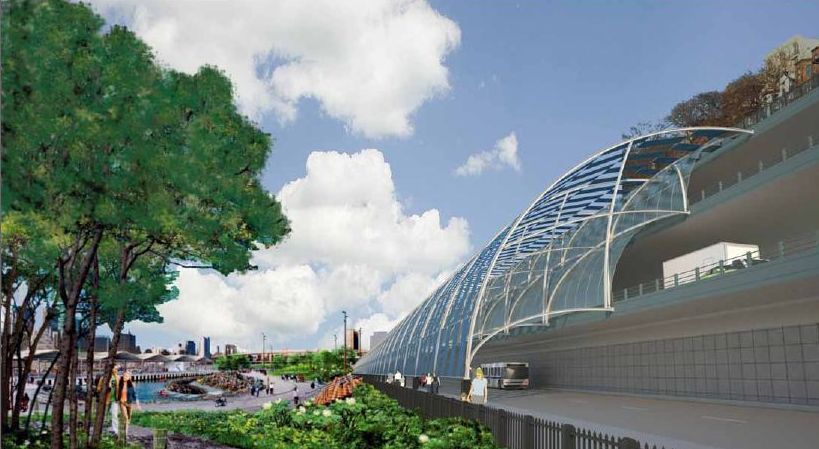
The Brooklyn-Queens Expressway at Brooklyn Bridge Park generates an overwhelming hum of traffic on a daily basis. In response, architect Donald Rattner in collaboration with Hage Engineering have “created a proposal intended to ameliorate traffic noise, provide more usable park area than has been possible to date, and enhance the public realm with a work of civic art.”

The design proposes to enclose the expressway, trapping the noise and preventing it from disturbing the visitors to the park. The expressway is set to undergo repairs from 2018 and the project could easily be factored in to the repairs. Rattner explains –

“There is a practical need to deal with the vehicular noise that emanates from the BQE. Regardless of what is ultimately built on the waterfront – housing, restaurants, ball fields, passive recreation areas – visitors to the open space and surrounding structures will be subject to relentless, unpleasant, potentially deafening noise – at 85 decibels, the equivalent of standing next to an operating lawnmower. But there is also an aesthetic dimension that needs to be addressed. Our proposal seeks to provide a pragmatic solution to the problem and simultaneously to offer those on both sides of the river an attractive piece of public sculpture to appreciate.”

The structure also aims to utilise innovative green architecture concepts; the exterior of The Connector will use photovoltaic cells designed to absorb solar energy.It’s the clever mixing of a traditional park with modern and highly practical design which makes the proposal so intriguing.

http://www.brooklynbridgeconnector.net/

For more information, have a read of the Brooklyn-Queens Expressway Connector e-book.

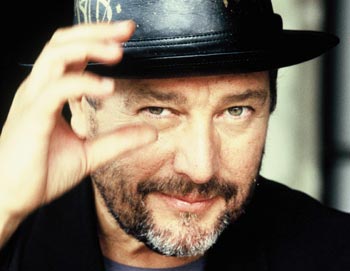
Philippe Starck — more than just an outrageous accent.

st

Designer Philippe Starck — Attempts to answer the question.. “Why design?”

An interesting and entertaining presentation.

Check out Philippe Starck’s full bio via Ted.Com

“…and there is people like me, who try to deserve to exist, and who are ashamed to make this useless job, who try to do it in another way, and they try, I try, to not make the object for the object but for the result, for the profit for the human being, the person who will use it. If we take the toothbrush — I don’t think about the toothbrush. I think, What will be the effect of the brush in the mouth? And to understand what will be the effect of the toothbrush in the mouth, I must imagine: Who owns this mouth? What is the life of the owner of this mouth? In what society this guy live? What civilization create this society? What animal species creates this civilization? When I arrive — (and I take one minute, I am not so intelligent) — when I arrive at the level of animal species, that becomes real interesting.”