Unique and affordable Steampunk Jewelry

il 430xN

After a bit of a stint of no posting, I would like to get back into the swing of things and share with you lovely readers a unique collection of Victorian Steampunk Jewelry.
The pieces below are by a talented individual by the name of Jennie Burns or Steampunk Jennie via her etsy store.

Each piece below is under $19.95 (USD) and would make a great pressie!

Need a crash course in ‘Steampunk?’ Check my original post here.

Details »

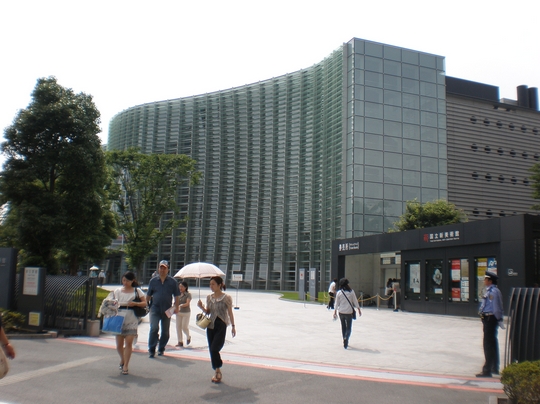
Tokyo National Art Center

P6280109

On our recent voyage to Japan, Tokyo proved to be our favourite destination – full of colour, youth culture, fresh design and architecture amongst many other things. One stunning structure which caught our attention, however, was the Tokyo National Art Center.

A stunning construction of glass and concrete, the building appears from afar to be more akin to a crystal than your typical building. The centre was designed by architect Kisho Kurokawa and located in Roppongi, the unofficial modern architecture district of Tokyo. Details »

Japan Trip: How about a stroll through a concrete Garden?

001

The first post in what I hope to be a series from my recent trip to Japan.
I hope for this series to be available as a guide to a few places to visit and a few things to do! (though it is very far from a complete list!)

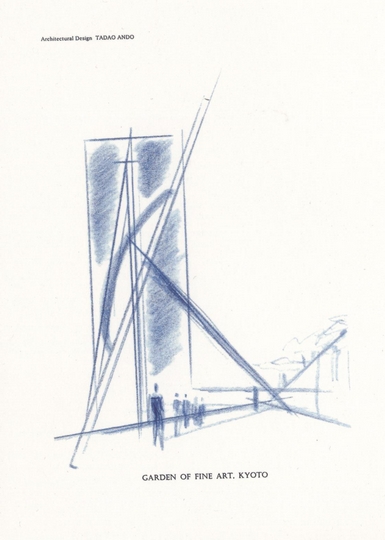
First I would like to share with you my visit to the Kyoto Garden of Fine Arts, by the master of concrete, Tadao Ando.
Personally, Ando’s work has been an amazing influence, such refined works from a man who had previously worked as a truck driver, a boxer and had no formal training.

You will more often than not hear Ando recognised for his use of concrete, a work of fine craftsmanship.

The Garden of Fine Art situated North of Japan’s traditional capital Kyoto and not far from the Kyoto Prefectural Botanical Gardens, is an ‘open air gallery.’ Though perhaps the words ‘garden’ and even ‘gallery’ are open to interpretation?

The garden’s classical works have been recreated on large weatherproof ceramic plates in a modern concrete ‘garden.’
Though the real interest for me was held in the minimalist concrete walkways and walls rather than the works themselves.

The garden, completed in 1990 uses modern materials of concrete and glass yet holds traditional works of art, and also responds to the serenity of a traditional Japanese garden. Two concrete ramps intertwine their way down into the lower parts of the garden, taking the visitor on a journey through large concrete volumes that serve as separating the space, creating voids whilst also serving as a surface for the works themselves.

Another main feature of the garden is the horizontal and vertical walls and pools of water that flow from the top most level down through the garden whilst the constant sound of falling water serves as soft background ambience.

The Main Entrance (and you can just see Monet’s water lillies under the surface.)

Window looking outside the garden

There are many water features that run horizontally, vertically, horizontally again like a maze through the garden, and also add a gentle background noise when walking through.

An intersection of elements that span through the entire building. (and a hint of the works contained.)

And a Detail of the same intersection.

In, looking out, this shot also shows the looping path that winds its way down to the bottom of the open garden.

Another shot of the ramp continuing down, you can see the element that goes through the wall (top right, and center)

A shot of the different levels and voids.

Openings revealing the works on the wall behind them.

Abrupt intersection and viewing point.

And Looking back, a good demonstration of the shear volumes dividing the space.

Another shot of the horizontal water and the path. Also hints of the botanical gardens behind.

Some photos of the recreated works themselves.

Garden of Fine Arts (Kyoto Fruits Toban Meiga no Niwa)
Shimogamo Hangicho, Sakyo-ku, Kyoto 606-0823. Tel. 075-724-2188
Hrs. 9:00-17:00 (enter by 16:30). Closed Dec. 28- Jan 4.
100 yen (50 yen in case of combination ticket with Kyoto Botanical Garden)
The fastest way to get here from Kyoto Station or Hankyu Karasuma is to take the subway to Kitayama Station.

Follow Friday

dwell

Some more hand picked twits to tickle your twitter taste buds.

http://twitter.com/dwell

http://dwell.com/

Bio: Following our team around the modern world.

http://twitter.com/webist

http://weburbanist.com/

Bio: This is the official Twitter feed of Webist Media – WebUrbanist + WebEcoist. Thanks for reading!

http://twitter.com/onlygadgetnews

http://tinyurl.com/av62fc

Bio: Get a wide range of news on state of the art gadgets. Reviews and release announcements.

http://twitter.com/imjustcreative

http://imjustcreative.com/imjustcreative-twitter-landing-zone/2008/12/11/

Bio: Freelance Logo and Brand Identity designer. I prefer the minimal and typographic. 22+ years experience. LoveHelvetica. LoveDogs. Freelance designer for hire.

http://twitter.com/rob_sheridan

http://www.rob-sheridan.com/

Bio: Artist/designer/photographer/geek. Creative Director for Nine Inch Nails.

http://twitter.com/designmom

http://designmom.com

10 Eco Wallpapers to chic-up your home.

18574-main

Inspired by a weekend searching for chic website wallpapers.. here is a sample of eco wallpapers (for your home!) from a range of designers and manufacturers –

Guilt free style!

Aspen


Peony


Heritage


Summer

Graham & Brown
Graham & Brown is very proud of it’s environmental efforts. Our Eco wallpaper collection were a world’s first. Design to our usual high standards, our Eco products are VOC Free (so no volatile organic compounds) and printed on paper from managed sources (for every tree chopped down three are planted).

‘Pavilion Birds’ Hand Finished Wallpaper

‘Burlesque’ Hand Printed Wallpaper

EcoCentric
This environmentally-friendly wallpaper is printed on paper from 100% FSC timber sources using purely water based inks, with no harmful VOC’s or solvents.

Butterfly Jubilee

Mod Green Pod
100% Organic Cotton Home Textiles- Our fabrics and wallpaper are US-made and follow the Global Organic Textile Standards to help create a healthy home.

Eco.se
‘For us at Eco Wallpaper, taking care of the environment is natural, at every stage from raw materials to finished product.

\

Follow Friday

U6avatar

In true inter-geek style, here is another follow friday for your twitterfeed.

http://twitter.com/urbansix

http://thinkcrust.blogspot.com/

Bio: Freelance Architect. Trail running, hiking, motorcycle, design, cinema, photography enthusiast. Parent.

http://twitter.com/smashingmag

http://www.smashingmagazine.com/

Bio: Vitaly Friedman, editor-in-chief of Smashing Magazine (www.smashingmagazine.com), an online magazine dedicated to designers and developers.

http://twitter.com/DesignerDepot

http://www.webdesignerdepot.com/

Bio: Webdesigner Depot is one of the most popular blogs about web design trends, tutorials and much more. It’s run by Walter Apai, a web designer from Vancouver.


http://twitter.com/mocoloco

http://mocoloco.com/

Bio: We change our wallpaper every day… on Twitter. Well most days if the fail whale would let us…

http://twitter.com/MuseumModernArt

http://www.moma.org/

Bio: Victor Samra (Digital Media/Marketing @ MoMA, aka @vsamra3) at the easel

http://twitter.com/ilovetypography

http://ilovetypography.com/

Bio: Founder of iLT. I quite like type (fonts). Designer, writer, typophile, bibliophile, atheist.

The making of a monster! SeventhStreet Studio – A sneak peak into their CG process.

1

SEVENTHSTREET Studio have given readers an insight into the creative process for one of their latest CG compositions, the ‘Mustang Monster.’

And the kind people at seventhstreet have the mustang desktop up for download here.

101 Things I learned In Architecture school

101 things i learned in architecture school

I would like to share with you a review of my newest, favourite-est architecture book —

101 Things I Learned in Architecture School

By Matthew Frederick

Frederick is an architect and urban designer from Massachusetts, and has taught at a number of colleges and universities, 101 Things is a collection of design ideas, philosophies and tips that he has put together to aid students in making sense of design and architecture as a whole.

The author’s note begins as follows..

“The architecture curriculum is a perplexing and unruly best, involving long hours, dense texts, and frequently obtuse instruction. If the lessons of architecture are fascinating (and the are), they are also fraught with so many exceptions and caveats the students can easily wonder if there is anything concrete (pun intended?) to lean about architecture at all.”

Frederick concludes, “This book aims to firm up the foundation of the architecture studio by providing rallying points upon which the design process may thrive.”

Frederick’s book was recommended to me by one of my tutors; it provides for students (and established professionals as he pointed out) the building blocks for architecture studio, providing students with fundamentals such as ‘how to draw a line’ to more complex theories of space, composition and design thinking.

The best thing about 101 Things I learned in architecture is the format; the pages are numbered, 1 to 101, and each providing a quick studio lesson, tip, quote, or just something to ponder, each accompanied by an explanatory drawing.

Not only does the book provide great tips and primer to studio, it also serves as a technical and intellectual guide that can be visited again and again during the design process. Often shedding a little more light on the vast world of architectural philosophy each time. Reminders to design in section, or a handy guide on architectural lettering. Every page in this little gem provides a little bit of knowledge certainly worth retaining.

I’d would also think that the 101 things is not to be limited to just architects, but would be of use to anyone design oriented.

Here’s a sample..

1. ‘How to draw a line’

8. ‘Architecture is the thoughtful making of space.’ (Louis Kahn)

12. Design an architectural space to accommodate a specific program, experience, or intent.

17. ‘The more specific a design idea is, the greater its appeal is likely to be.’

18. Any design decision should be justified in at least two ways.’

22. ‘How to make architectural hand-lettering.’

34. ‘Frame a view, don’t merely exhibit it.’

50. ‘Windows look dark in the daytime.’

59. ‘Traditional buildings have thick exterior walls. Modern buildings have thin walls.’

72. ‘Design with models!’

96. ‘Summer people are 22 inches wide. Winter people are 24 inches wide.’

100. ‘Give it a name’

101. Architects are late bloomers.’

‘101 Things de-mythologizes the jargon that obscures the real meanings of what is taught in design schools. Anyone interested in design will learn much for this terrific book.’

– President of Boston Architectural College, Theodore C. Landsmark.

Even the size, the chip board cover and price (less than 10 US on amazon from memory!) are appealing, and leaves you no excuse!